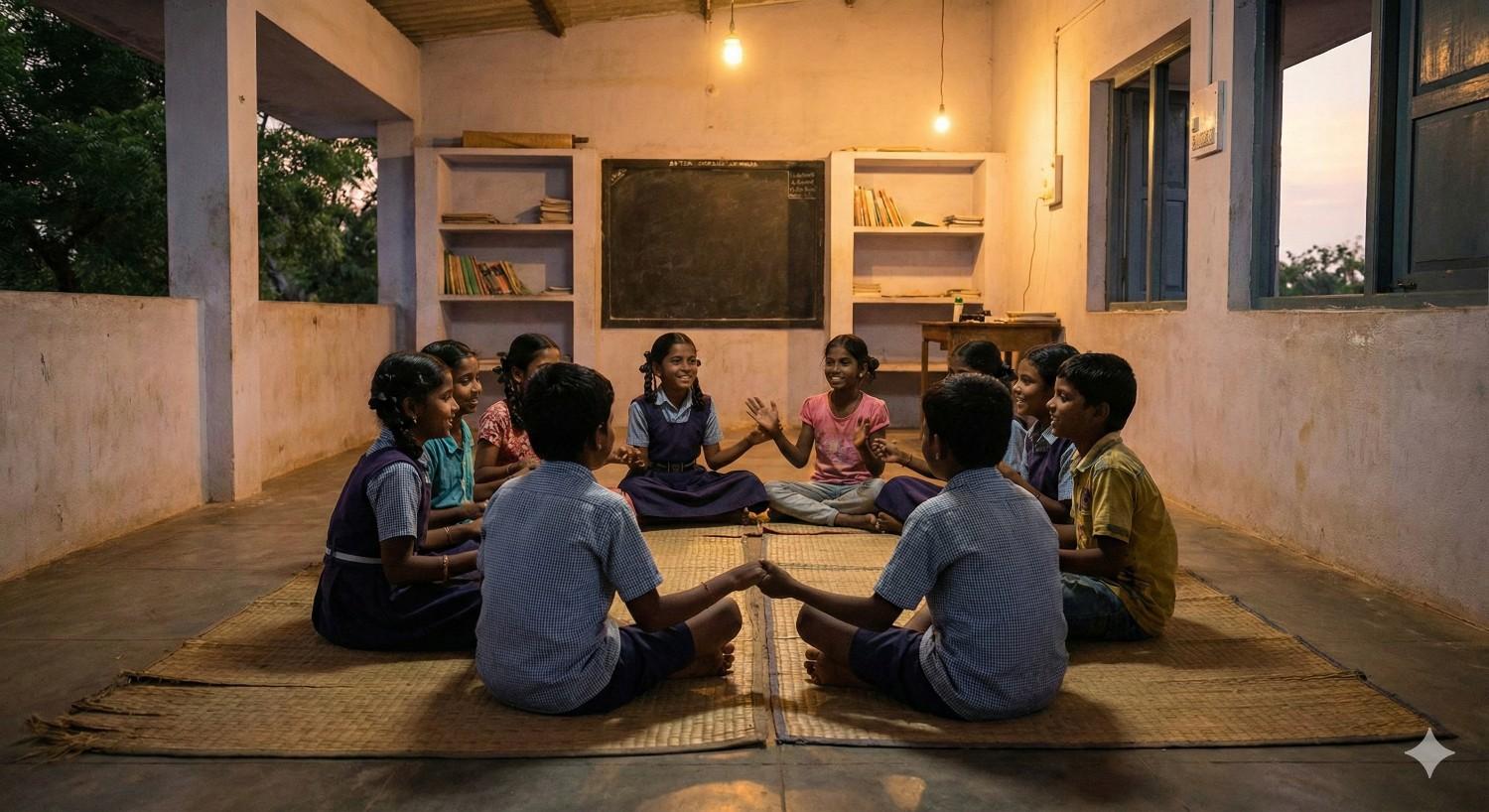
Our after-school classroom usually begins at 6:00 pm
Yesterday, it did not.
The children were still playing. Instead of stopping them abruptly, we allowed free play to continue until 6:10 pm. They come to us after spending the whole day in school sitting, listening, responding, and conforming. Their minds and bodies carry the weight of that structure. They need a decompression space. Free play is not a luxury; it is psychological recovery.
When we called them for circle time, they struggled to organise themselves. They were not resisting. They simply did not yet know how to synchronise as a group without adult intervention. In that moment, it became clear to me that responsibility cannot be taught through instruction alone. It must be experienced. It must be lived.
So, I waited.
They formed and reformed the circle. They debated about which game to play. They looked at me repeatedly, expecting me to decide. I did not.
Slowly, they discovered the idea of majority. The majority chose one game. The minority stepped aside and started another. One child attempted to disturb the majority group. At that moment, I made only a minimal intervention—just enough to restore emotional balance, but not enough to take ownership away from them.
If I had imposed order, it would have been efficient. But efficiency is not development. They needed to experience negotiation, disagreement, fragmentation, and consequence. They needed to discover how a group finds its own equilibrium.
By 6:25 pm, the energy had settled naturally. They completed a game successfully. This particular game develops listening, patience, and collective awareness in a powerful way. Suppose there are fifteen members in the group. They must count from 1 to 15, but each number can be spoken by only one person at a time, and no one knows who will speak next. If two people speak at the same time, the group must restart from the beginning.
The game demands attention—not only to oneself, but to others. It demands restraint, awareness, and sensitivity.
They loved the challenge. When they finally completed it, there was a visible sense of collective achievement.
Only after that was the classroom truly ready.
Making the Invisible Curriculum Visible
When I took over the circle, I made something explicit that usually remains invisible.
“You come here after a full day of school. You need time to relax. That is why we give free play. During that time, you can choose what you want to play.”
“But after that, it is group play. That is bonding time. In a group, it is not about individual likes and dislikes. Sometimes you follow the majority. Sometimes you help organise the group when it goes out of sync. Sometimes you remain quiet so you do not disturb the flow.”
I told them clearly:
Leadership is not about controlling.It is not about remaining silent either.It is about knowing when to act and when to step back.
These qualities matter everywhere—in relationships, in communities, and in their future professional lives.
Free play and group play are not wasted time. They are developmental spaces where awareness, responsibility, and social intelligence are formed.
I could see a shift in their faces. Many children unconsciously believe that only academic work counts as learning. Yesterday, they began to understand that learning also happens through interaction, observation, and shared experience.
The Honesty Breakthrough
During regular sessions, I have often noticed children asking repeatedly for water or toilet breaks. I understood what was happening beneath the surface. They were tired. Their attention was fading. But instead of expressing that honestly, they created acceptable excuses.
So I told them:
“If you are tired, you can simply say you are tired. Take a two-minute break and come back. There is no need to pretend.”
I shared something they immediately recognised:
“When the teacher enters, students pretend to study. When the teacher leaves, they begin talking. We all know this pattern.”
They laughed. They admitted it openly.
Then they said something important:
“In sports period and drawing period, we don’t do this.”
Exactly.
Because they are fully involved.
When involvement is genuine, discipline becomes natural. It does not need enforcement.
So, I told them:
“Even if you study for only fifteen minutes, do it with full involvement. If you cannot, take a short break. But do not pretend.”
This conversation changed the atmosphere.
They realised they did not need to perform for the teacher. They could be honest about their state.
Honesty replaced performance.
Choice as Responsibility
Then I offered structured freedom.
“I am going to teach this lesson. Whoever is interested can join me. If you prefer the library, you can go there. If you want to draw, you can draw. But one rule—do not disturb others.”
The response was deeply revealing.
Younger children chose drawing.
One senior girl chose to prepare for her exams.
Two girls chose picture reading.
Some joined me to learn English.
One senior student joined a very basic spoken English session. I told her, “If you get bored, you can move.” She stayed.
When children are given genuine choice, they do not become irresponsible. They become intentional.
I told them clearly:
“I can guide you. I cannot force you. If I force you, your body may stay, but your mind will leave. Your life depends on your choices. My role is to guide, not control.”
I could see that this message reached them.
The classroom did not become silent.
It became honest.
What Actually Changed
Something subtle but profound happened.
Two girls who would normally pretend to work came and told me honestly:
“Sir, we will read this picture book first, then play.”
The book was below their academic level. But that was not the point. Their honesty was the real learning. I accepted their choice. After reading, I gave them a small spoken challenge before they went to play.
There was no urgency to impose uniform behaviour. Some drew. Some studied. Some read. Some learned English. Yet the classroom remained deeply engaged. There were no disturbances.
Learning was happening in multiple forms.
At one point, three children who were drawing interacted with a senior girl who was preparing for her exams. To reinforce her own preparation, she explained a story in Hindi using actions and expressions. The younger children understood through observation, gesture, and inference.
She strengthened her preparation.
They strengthened their listening and comprehension.
This is the power of responsible freedom.
When the environment permits, children naturally become both learners and teachers.
Often, as adults, we underestimate this process. We equate discipline with silence and compliance. But true discipline is internal. It emerges from ownership, not enforcement.
The Real Achievement
The biggest achievement yesterday was not academic.
It was this:
They stopped pretending.
They began expressing their real needs.They began taking responsibility for their choices.They experienced freedom with accountability.
When a child becomes honest about their energy, their boredom, and their interest, learning becomes self-sustaining.
Forced discipline creates performance.Trusted responsibility builds character.
Yesterday, the class began late.But something deeper began on time.
The real work now is to sustain these moments. Transformation does not happen in a single day. It unfolds slowly, through repeated experiences of trust, responsibility, and awareness.
These shifts are subtle. They cannot always be measured. But they can be seen—in the honesty of a child’s voice, in the stability of a group, and in the quiet emergence of ownership.
And when that happens, education is no longer something imposed.
It becomes something lived.

 Feb 22, 2026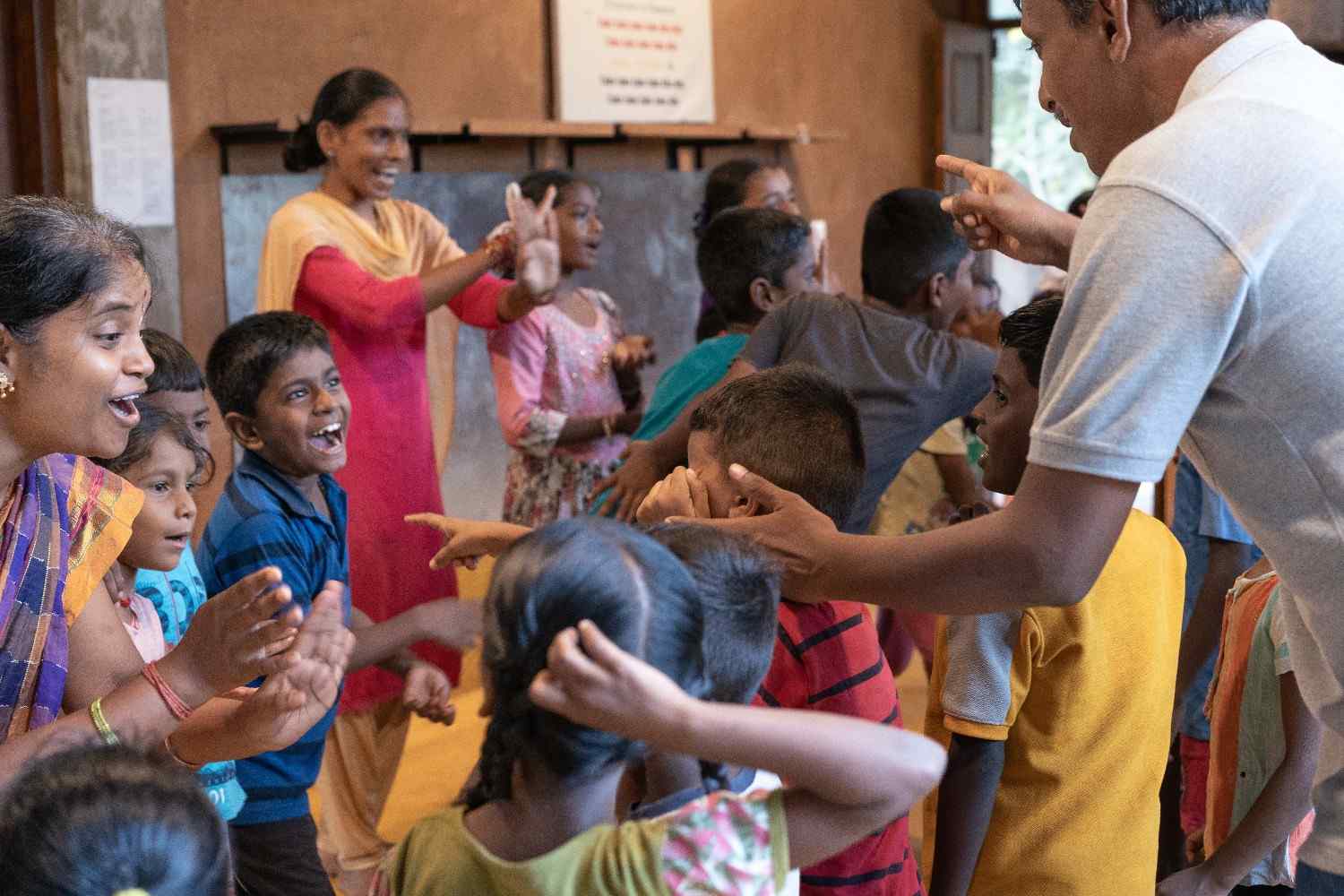



Blog Comments (0)
No comments yet.